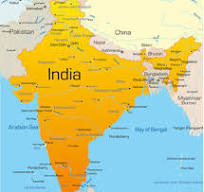
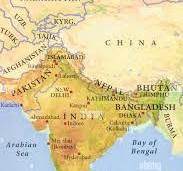
Tips for travel to India or South Asia
- Pack as light as possible. Pack one check-in bag (50 Ibs. Max.) and one carry–on bag. Roll your clothes when packing. Pack dry laundry detergent.
- Pack valuable items in your carry-on bag (laptop, tablet, cell phone, camera, etc.). Please don’t pack any unnecessary valuables.
- Only drink bottled/canned water, soda, or other drinks.
- Brush your teeth with bottled water only. Do not use water from the faucet.
- Don’t eat anything washed with unclean water (fruits, vegetables, etc.)
- Never leave belongings unsupervised while in public places.
- Never leave the group. Don’t go anywhere alone.
- Engage in the people and culture as much as possible. Most people will be fearful to approach you at first so engage with them.
- Make sure to protect your passport. Passports are a target for thieves as they bring good money on the black market.
- Don’t become a target. Dress in a way that will not draw attention. Conservative dress is always that best way to go.
- Pray and prepare for spiritual and physical challenges. India is a spiritual stronghold of the dark kingdom.
- Pray for the team, for people you will meet, and for God to open doors of ministry while we are there.
- Be flexible! There will be changes and surprises around every corner. Take these changes with lots of patience and grace.
Prepare for Cultural Differences
India’s culture is rich and varied, and customs may differ significantly from your home country. Keep these in mind:
- Dress modestly, especially when visiting religious sites.
- Remove shoes before entering temples and homes.
- Be mindful of personal space, as crowds can be overwhelming in major cities.
Health and Safety Precautions
- Food and Water Safety: Stick to bottled or filtered water and avoid street food unless it’s from a busy, reputable vendor.
- Travel Insurance: A comprehensive policy that covers medical emergencies, theft, and trip cancellations is advisable.
In Country Transportation Tips
India has a variety of transportation options, from tuk-tuks and rickshaws to trains and flights.
- Domestic flights are great for covering long distances quickly.
- Indian Railways is an experience in itself—opt for AC classes for comfort.
- Rideshare apps like Uber and Ola can be safer and more reliable than hailing taxis.
Handling Money and Payments
- The Indian Rupee (INR) is the local currency. It’s best to carry cash in smaller denominations for rural areas.
- Credit/debit cards are widely accepted in urban areas, but mobile payment platforms like Google Pay and Paytm are increasingly common.
- ATMs can sometimes be unreliable, so plan accordingly.
Respect Local Customs and Etiquette
- Always use your right hand when giving or receiving items.
- Avoid public displays of affection.
- Tipping is not mandatory but appreciated in restaurants and for services.
Embrace the Chaos and Enjoy the Experience
India can feel chaotic, but that’s part of its charm. Embrace the unpredictability, interact with locals, and be open to new experiences. Whether you’re exploring ancient temples, savoring street food, or witnessing stunning landscapes, India has something for every traveler.
With the right preparation and an open mind, your journey to India can be truly transformative. Have a great trip!
Dietrich Bonhoeffer’s The Cost of Discipleship is deeply rooted in Scripture. Here are some of the key Bible verses that form the foundation of his arguments:
1. Cheap Grace vs. Costly Grace
- Romans 6:1-2 – “What shall we say then? Shall we continue in sin, that grace may abound? God forbid. How shall we, that are dead to sin, live any longer therein?”
- Bonhoeffer uses this passage to contrast cheap grace (grace without transformation) with costly grace (grace that leads to obedience).
2. The Call to Discipleship
- Matthew 4:19-20 – “And he saith unto them, Follow me, and I will make you fishers of men. And they straightway left their nets, and followed him.”
- Bonhoeffer emphasizes that true discipleship demands immediate and total obedience to Christ’s call.
3. Taking Up the Cross
- Luke 9:23 – “And he said to them all, If any man will come after me, let him deny himself, and take up his cross daily, and follow me.”
- This verse is central to Bonhoeffer’s teaching that discipleship involves self-denial and suffering.
- Luke 14:26-27 – “If any man come to me, and hate not his father, and mother, and wife, and children, and brethren, and sisters, yea, and his own life also, he cannot be my disciple. And whosoever doth not bear his cross, and come after me, cannot be my disciple.”
- Bonhoeffer highlights the radical cost of discipleship—placing Christ above all earthly attachments.
4. Living Out the Sermon on the Mount
- Matthew 5-7 (Sermon on the Mount)
- Bonhoeffer considers this passage as Jesus’ direct command to His followers, not just an ideal. Key verses include:
- Matthew 5:3-12 (The Beatitudes) – Describing the characteristics of true disciples.
- Matthew 5:13-16 – “You are the salt of the earth… You are the light of the world.”
- Matthew 6:33 – “But seek ye first the kingdom of God, and his righteousness; and all these things shall be added unto you.”
- Bonhoeffer considers this passage as Jesus’ direct command to His followers, not just an ideal. Key verses include:
5. Obedience vs. Mere Belief
- James 2:17 – “Even so faith, if it hath not works, is dead, being alone.”
- Bonhoeffer stresses that true faith leads to action, not just intellectual belief.
- Matthew 7:21 – “Not every one that says unto me, Lord, Lord, shall enter into the kingdom of heaven; but he that does the will of my Father which is in heaven.”
- A warning that calling oneself a Christian is not enough—obedience is required.
6. Persecution and Suffering for Christ
- 2 Timothy 3:12 – “Yea, and all that will live godly in Christ Jesus shall suffer persecution.”
- Bonhoeffer, facing Nazi persecution, saw suffering for Christ as inevitable for true disciples.
- John 15:18-19 – “If the world hate you, you know that it hated me before it hated you. If you were of the world, the world would love his own: but because you are not of the world, but I have chosen you out of the world, therefore the world hates you.”
- He reminds believers that following Jesus means standing against the world’s values.
7. The Narrow Way
- Matthew 7:13-14 – “Enter in at the strait gate: for wide is the gate, and broad is the way, that leads to destruction, and many there be which go in thereat: Because strait is the gate, and narrow is the way, which leads unto life, and few there be that find it.”
- Bonhoeffer uses this to emphasize that true discipleship is difficult and unpopular.
These verses encapsulate the heart of Bonhoeffer’s message—that following Christ is costly, but it is the only true path to life.
The ABC of the Gospel is a simple way to explain the message of salvation through Jesus Christ. It helps people understand how to respond to the gospel and begin a relationship with God.
A – Admit (Acknowledge) that you are a sinner
- Romans 3:23 – “For all have sinned, and come short of the glory of God.”
- Romans 6:23 – “For the wages of sin is death; but the gift of God is eternal life through Jesus Christ our Lord.”
- We must recognize our sin and our need for a Savior.
B – Believe in Jesus Christ
- John 3:16 – “For God so loved the world, that he gave his only begotten Son, that whosoever believeth in him should not perish, but have everlasting life.”
- Acts 16:31 – “Believe on the Lord Jesus Christ, and thou shalt be saved.”
- Salvation comes through faith in Jesus—believing that He died for our sins and rose again.
C – Confess and Commit to Christ
- Romans 10:9-10 – “That if thou shalt confess with thy mouth the Lord Jesus, and shalt believe in thine heart that God hath raised him from the dead, thou shalt be saved.”
- 2 Corinthians 5:17 – “Therefore if any man be in Christ, he is a new creature: old things are passed away; behold, all things are become new.”
- Confessing Jesus as Lord and committing to follow Him leads to a transformed life.
This simple framework makes it easy to share the gospel with others.
 RUI Ministries